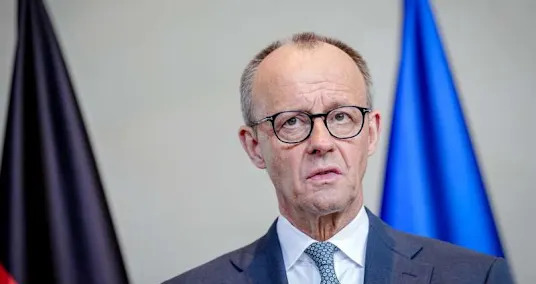
German Chancellor Friedrich Merz has said that 80% of the more than 900,000 Syrian nationals in Germany should return to their home country in the next three years.
At a press conference with Syria's interim President Ahmed al-Sharaa in Berlin on Monday, Merz said the leaders agreed that over the "longer term of the next three years," around "80% of the Syrians currently in Germany should return to their homeland."
"That was also the wish of President Sharaa," Merz said, adding that "those Syrians who wish to remain in Germany and are well integrated will be able to stay in Germany."
Germany was one of the main destinations for Syrian refugees fleeing the devastating civil war, with around 1 million arriving in the country during dictator Bashar al-Assad's time in power.
Calls for Syrian nationals to leave Germany have risen in conservative and far-right circles following al-Assad's ousting in late 2024 by an Islamist coalition led by al-Sharaa.
LATEST POSTS
- 1
 Figurine of a woman and a goose offers peek at prehistoric beliefs
 - 2New COVID-19 variant 'Cicada' is spreading. What to know about BA.3.2.
- 3Shas threatens to oppose 2026 state budget over haredi food-voucher exclusion
- 4Vote in favor of your Number one natural product
- 510 Asian Countries Perfect for Solo Female Travelers




- Stop the ‘good’ vs ‘bad’ snap judgments and watch your world become more interesting
- Iranian strikes on Israel injure 11 and set chemical plant ablaze
- Telecommute Arrangement: What's Pivotal for Your Efficiency?
- Historical mysteries solved by science in 2025
- Find the Wonders of the Silk Street: Following the Antiquated Shipping lanes
- Palestine weekly wrap: Protests sweep West Bank after death penalty law
- Track down Your Optimal Conservative Vehicle: Famous Brands to Consider
- My skin feels drier, my lips thinner and my makeup heavier. How do I adjust my routine for aging skin?
- Unfathomable and Entertaining Legal disputes That Surprise everyone