By Will Dunham
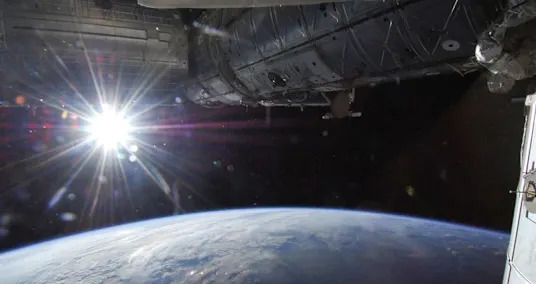
WASHINGTON, March 30 (Reuters) - As humankind moves toward the goal of establishing a long-term presence on the moon and Mars, the question of whether reproduction is possible in extraterrestrial environments may no longer be merely hypothetical. And new research using simulated microgravity conditions has identified some major challenges.
Experiments conducted by scientists in Australia found that microgravity conditions, simulated in a laboratory, disrupt sperm navigation, reduce fertilization rates and, when exposure is prolonged, compromise the quality and survival of early embryos.
They found that human and mouse sperm cells were around 50% less effective at swimming through a channel mimicking the female reproductive tract under these conditions compared to normal gravity. In mouse eggs, this translated into a drop of roughly 30% in fertilization success. The research also revealed complications in early embryo development.
The human body evolved over millions of years to function optimally in Earth's environment, including its gravity, and trekking beyond Earth's confines causes many physiological changes that affect human health.
The United States, with NASA's Artemis program, is planning to land astronauts on the moon in the coming years, as is China.
"With the Artemis program actively working to return humans to the moon and serious plans underway for crewed Mars missions, the ability to reproduce beyond Earth is fundamental to any long-term settlement," said reproductive scientist Nicole McPherson, who heads the Sperm and Embryo Biology Group at Adelaide University's Robinson Research Institute in Australia, lead author of the study published in the journal Communications Biology.
"That includes not just human reproduction but also the animals and agricultural species any self-sustaining habitat would depend on," said McPherson, who also serves as director of research and diagnostic laboratories at Genea, one of Australia's leading IVF providers.
Fertilization occurs when a man's sperm cell navigates through the female reproductive tract and penetrates an egg cell, with the genetic material of the two cells combining. The new study is the first to show that gravity plays a critical role in sperm's ability to navigate toward an egg.
"It is not the ability to swim that is affected. Sperm in microgravity still move, they just cannot find their way. The function that appears to be disrupted is navigation, the ability to orient and move with purpose toward a destination. We believe this happens because many of the proteins on the surface of sperm act as mechanosensors, tiny molecular devices that detect physical forces including gravity," McPherson said.
"When that gravitational pull is removed, these sensors appear to be thrown off, leaving the sperm without a reliable frame of reference for up, down or which direction to move. It is a bit like trying to navigate a maze blindfolded and spinning," McPherson said.
Adding progesterone, a female hormone naturally released around the time of ovulation as a chemical homing signal that assists sperm in finding their way, helped more human sperm overcome microgravity's negative effects.
SIMULATING MICROGRAVITY
To simulate microgravity, the researchers used a device that makes cells experience a condition resembling the continuous free fall of weightlessness in space. To test navigation, they used a plastic chamber with narrow channels open at both ends, with the sperm needing to navigate from one end to the other.
There was a roughly 50% reduction in the number of human and mouse sperm that successfully navigated in microgravity compared to normal gravity.
For mouse eggs, there was a 30% reduction in successful fertilization after four to six hours of microgravity compared to normal gravity. The embryos that managed to form under microgravity appeared to be of higher quality, with more of the cells that go on to form the fetus.
"This suggests that brief microgravity exposure may act as a kind of selective filter, with only the most resilient sperm and embryos succeeding," McPherson said.
But when developing mouse embryos were exposed to microgravity during the first 24 hours after fertilization - when the genetic material from both parents comes together for the first time - fewer embryos formed, and those that did showed signs of developmental delay and reduced cell counts in the critical early stages.
There were similar embryo findings using pig cells.
"The clearest conclusion is that reproduction in space is going to be considerably more challenging than most people assume, and that the challenges appear at multiple stages, not just one," McPherson said.
(Reporting by Will Dunham; Editing by Daniel Wallis)
LATEST POSTS
- 1
 Transcript: Scott Gottlieb on "Face the Nation with Margaret Brennan," Dec. 7, 2025
 - 2Living in the dark: Gaza’s struggle for electricity
- 3'Tangled' live-action movie casts Teagan Croft and Milo Manheim as Rapunzel and Flynn
- 4Many European nations want Israel to cancel 19 new settlement plans
- 5Explainer-What Novo Nordisk's weight-loss pill approval means for company, patients




- Vote in favor of the juice that you love for its medical advantages!
- From Loner to Force to be reckoned with: Individual Accounts of Change
- Newly Built Sichuan Hydropower Bridge Collapses Into River Months After Opening
- Foreign military officials can become Israel's ambassadors, senior IDF commander tells 'Post'
- Ethiopian earthquakes and volcanic eruptions: earth scientist explains the link
- Wellness Bits of knowledge Readily available: A Survey of \Following Wellbeing and Progress\ Wellness Wearables
- Europe pledges over €15bn for clean energy for Africa
- Fake new headlights rule steer Australian drivers astray
- How to watch Dick Clark’s New Year’s Rockin’ Eve with Ryan Seacrest: Start time, TV channel, performers and more


